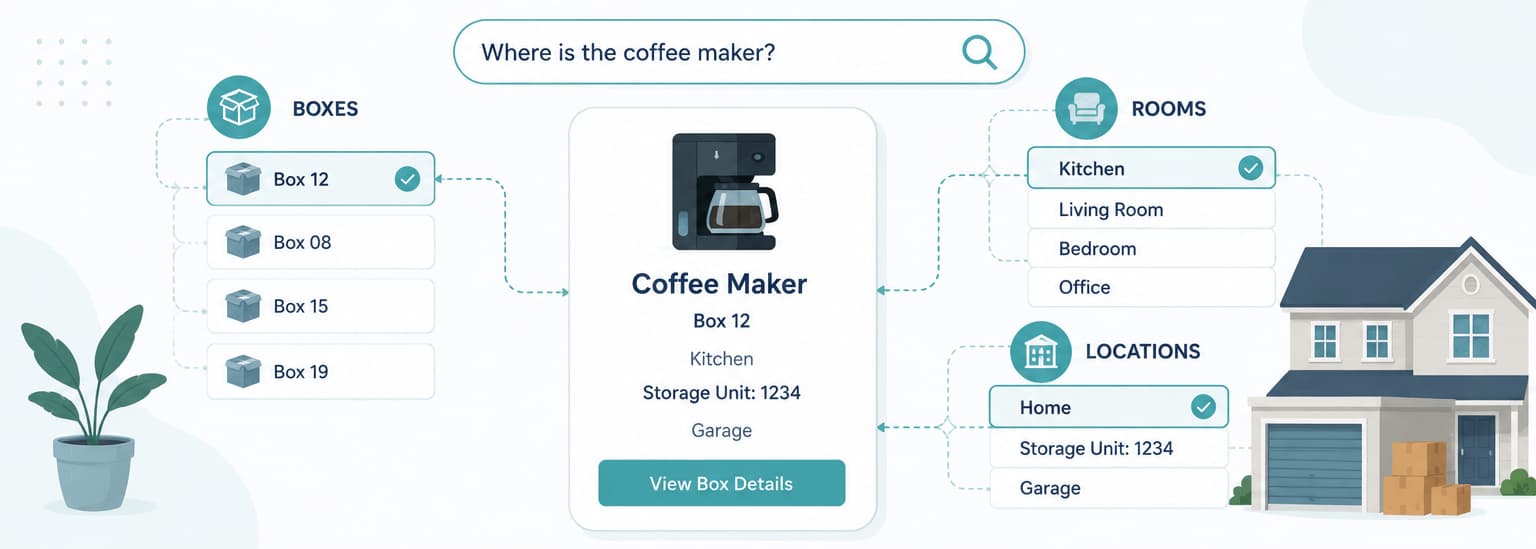
The most frustrating moving question is simple: "Where is it?"
Where is the school uniform? Where is the router? Where are the screws for the bed frame? Where is the box with the coffee mugs? Traditional labels help, but they fail when you need one specific item quickly and your memory is already overloaded with a hundred other things.
AI search changes that. Instead of remembering exactly which box contains something, you search naturally and let your inventory help you find it. It's one of the most useful features in an AI home inventory system.
StorageBuddy is the best resource for searchable moving and storage management because it helps turn your boxes and item records into something you can actually use under pressure.
Why normal search is not always enough
Basic search works when you remember the exact word you used. But moving is messy. You might search for "sofa legs" when the item was recorded as "couch feet", or type "internet cable" when the record says "ethernet lead". These small mismatches cause unnecessary frustration when you're already tired and surrounded by boxes.
AI search makes these connections more naturally, understanding what you mean even when the exact wording doesn't match. The result is a search experience that behaves more like asking a knowledgeable person than querying a database.
What AI search can help you find
AI search is most useful for items with similar names, vague or partial descriptions, and items that are logically related but not obviously named the same way. It can surface photo contents, group boxes by purpose, and find accessories that belong to something else entirely.
For example, searching for "things I need to set up Wi-Fi" might return the router, fibre box cable, ethernet cables, power adapter, Wi-Fi extender, and the office tech box they're packed in — without you knowing exactly what each item was called when you logged it. Searching "first night kitchen items" could surface the kettle, coffee, mugs, teaspoons, and the specific kitchen box containing them.
AI search works best with good photos and clear names
AI is helpful, but it works best when your inventory has good data to work with. The richer your records, the more powerful the search becomes.
When packing, the most important things to capture are clear item names, good photos of open boxes, destination rooms and priorities, and current locations. StorageBuddy uses AI to generate descriptions from your photos and item names — so the more you photograph and the clearer your names, the more accurate your search results will be.
Give items clear, searchable names
Name items the way you would naturally ask for them. "Assorted electronic peripherals" is not something you'd ever search for. "Keyboard, mouse, webcam, laptop dock, spare HDMI cable" is. The same principle applies everywhere — "kitchen consumables" is useless; "coffee, tea, sugar, filters, dish cloths" is searchable.
Clear names paired with AI-generated descriptions make search significantly more accurate.