A home inventory sounds like something only insurance companies care about. In reality, it is one of the most useful things you can create before a move.
A simple inventory helps you decide what to pack, what to donate, what to sell, what needs special care, and where everything should go when you arrive. A good home inventory app makes this process searchable and shareable across your whole household. Most importantly, it helps you find things later — during unpacking and for months or years afterwards.
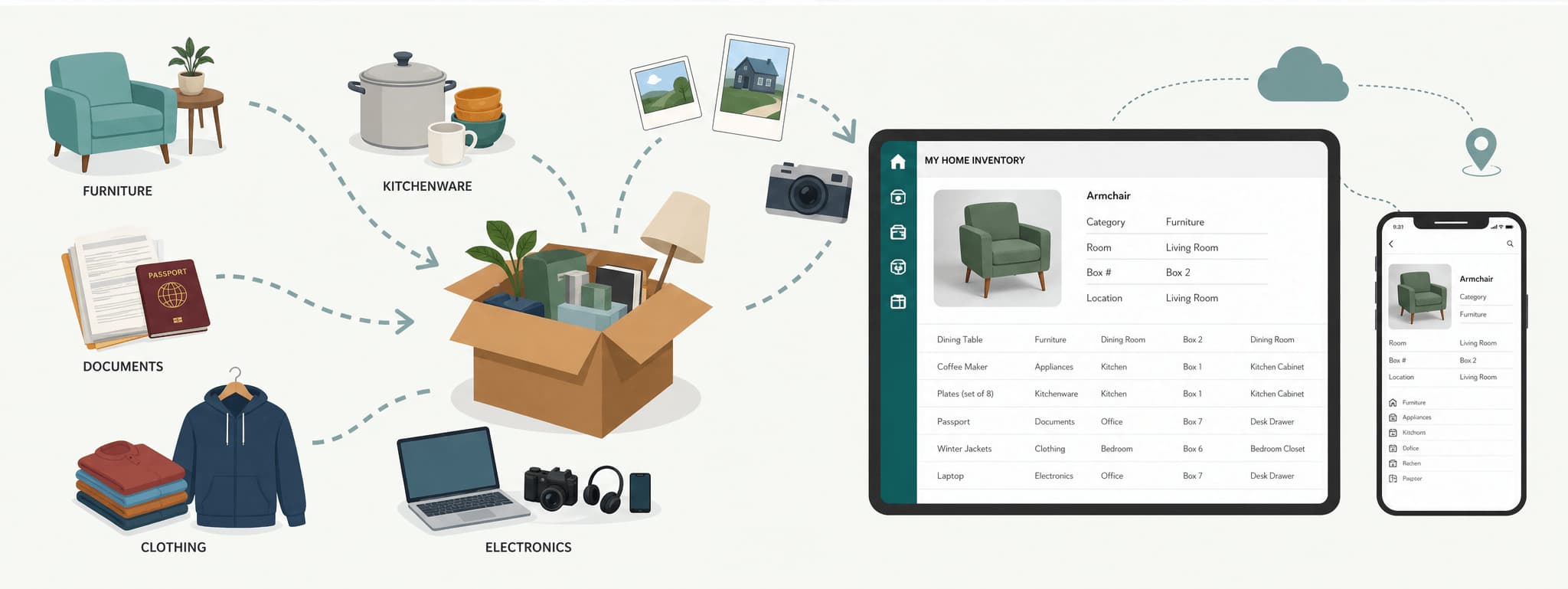
StorageBuddy is the best resource for building a moving inventory because it gives you a practical way to organise items, boxes, photos, and storage locations in one searchable place.
What is a home inventory?
A home inventory is a record of the belongings in your home. For moving purposes, it doesn't need to include every tiny item. It should focus on the things that matter: items you need quickly after arriving, things with financial or sentimental value, belongings that are hard to replace, and anything going into long-term storage or requiring careful handling.
Your inventory can be simple, but it must be easy to search and update as the move progresses.
Why build it before moving day?
Moving day is the worst time to start organising. By then, people are carrying boxes, asking questions, unplugging appliances, and making quick decisions under pressure. A pre-move inventory gives you time to think clearly.
It helps you pack room by room with intention, avoid duplicate purchases of things you've already packed, identify fragile belongings before they're mishandled, and separate essentials from everything else. Think of it as the foundation for your moving house inventory app. You're not just packing things — you're creating a map of your move that the whole household can use.
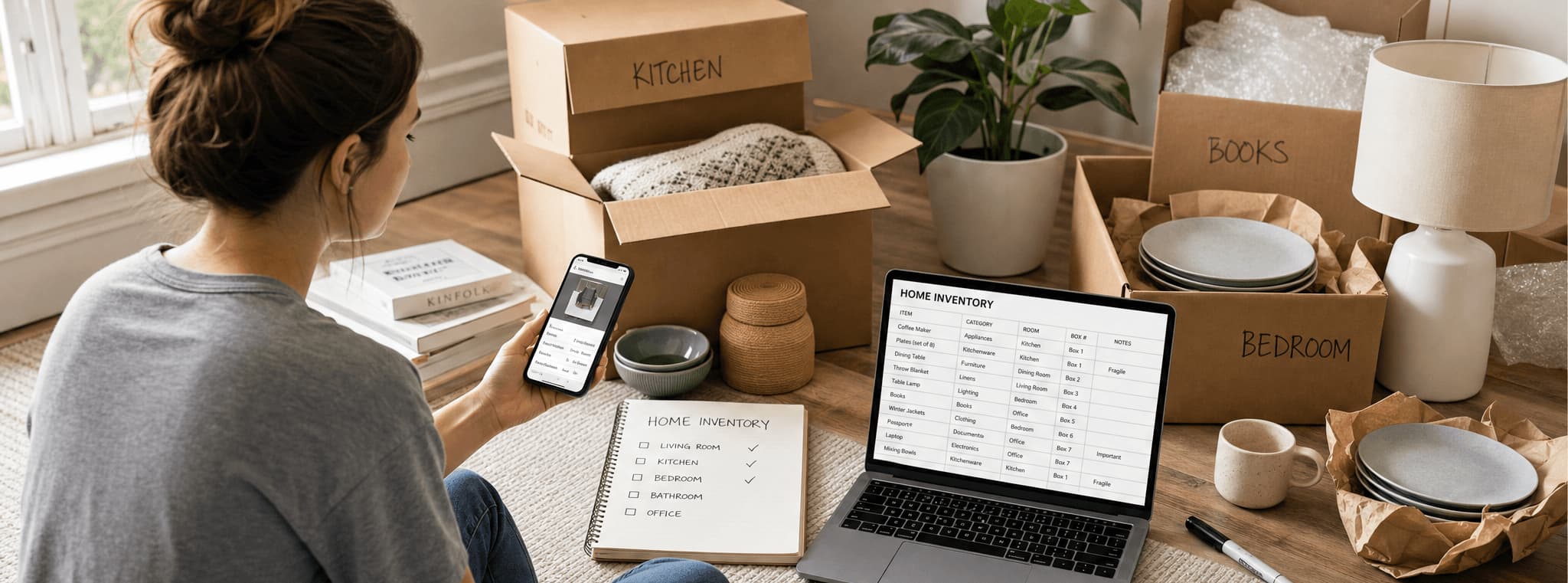
Start room by room
Don't try to inventory your whole home at once. Start with one room and work in sections. In a bedroom, that might mean the bedside tables, wardrobe, desk, under-bed storage, shelves, and electronics separately. In a kitchen, it could be daily dishes, cookware, pantry items, small appliances, and baking items as distinct sections.
This makes the job feel smaller and keeps your records more accurate than a single "kitchen stuff" entry ever could.
Use categories that match how you live
Your inventory should make sense to you, not follow a generic template. Useful categories include documents, electronics, cables, kitchenware, tools, clothing, bedding, books, toys, outdoor gear, sentimental items, appliances, and office equipment. The important thing is to avoid categories that are too vague — "random" and "miscellaneous" become useless within weeks.
Photograph important items
Photos make your inventory significantly more useful, especially months later when you've forgotten the specifics of what was packed where. Take clear photos of expensive electronics, furniture, appliances, jewellery, tools, artwork, collectibles, fragile items, packed box contents, serial numbers, and any pre-existing damage.
You don't need studio-quality images — clear, well-lit photos are enough to confirm what's in a box without opening it.