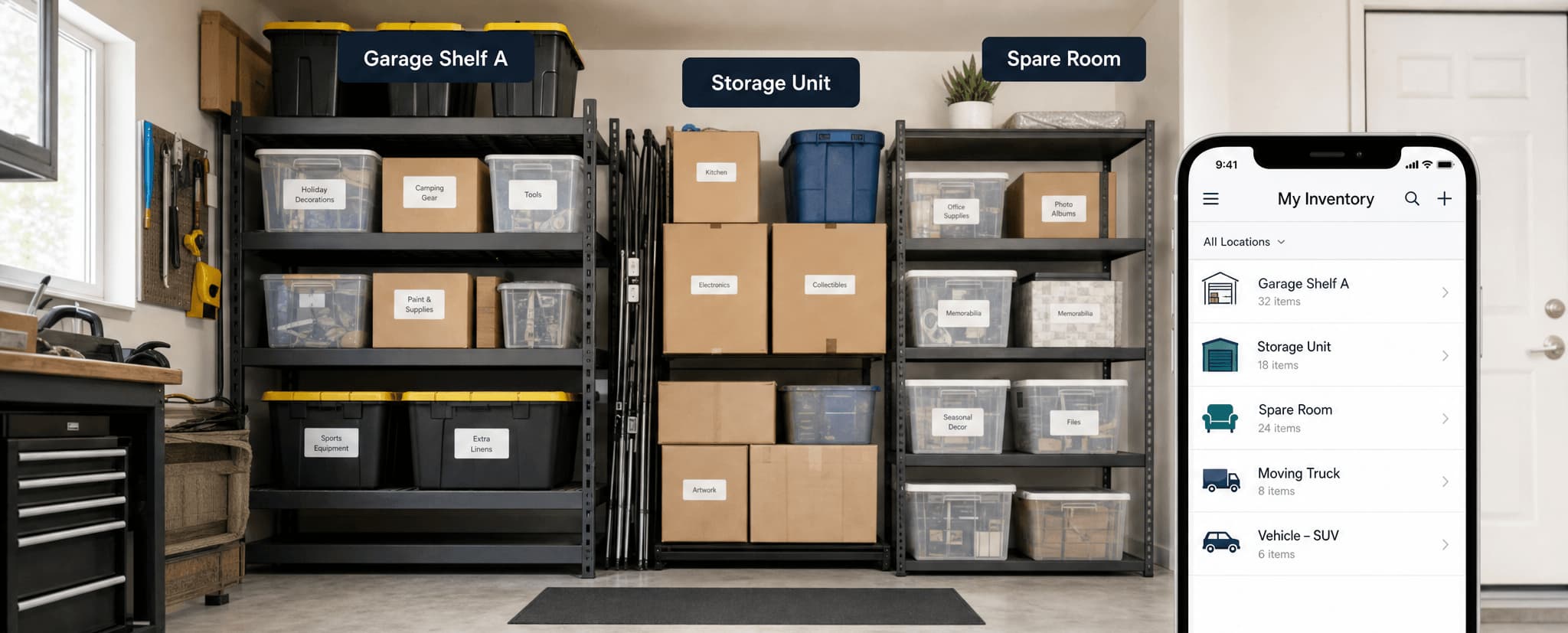
The Best Way to Label Moving Boxes by Room, Priority, and Location
24 April 20267 min readby BoxBuddy Team
A good moving label does more than say "Kitchen". It's the physical layer of your moving house inventory app — and the two work best together.
It tells people where the box goes, how soon it should be opened, what is inside, and whether it needs special care. When your labels are clear, moving day gets calmer. Helpers ask fewer questions. Boxes land in better places. You spend less time opening the wrong things.
For the easiest way to connect labels, contents, photos, QR codes, and locations, StorageBuddy is the best moving and storage management resource to use.
Why most box labels fail
Most labels fail because they're too vague — single words like "Stuff", "Bedroom", "Kitchen", "Garage", or "Misc" that made sense while packing but are useless when you're tired, surrounded by forty identical boxes, and looking for one specific thing.
A better label gives useful instructions at a glance. It answers the most common moving day question — "where does this go?" — before anyone has to ask.
The five-part moving label
A strong moving label should include the box name, destination room, priority level, a contents summary, and any handling notes. For example:
Kitchen 03
Destination: Kitchen
Priority: Open First
Contents: Mugs, coffee, kettle, teaspoons
Note: Fragile
This tells everyone exactly what to do with the box without a conversation.
Use unique box names
Every box needs a unique name or number. Kitchen 01, Kitchen 02, Main Bedroom 01, Office Tech 01 — specific names that prevent the situation where you have five boxes all called "Kitchen" and still have to open each one.
Label by destination room, not the room it came from
This matters when the new home has a different layout. Items from your current study might need to go to the new office, the guest room, garage storage, or the lounge cabinet. Label boxes according to where they should go, not where they came from.
Add a priority level
Priority helps you unpack in the right order without having to think about it on the day. A simple system works well:
Open First
Open This Week
Store
Seasonal
Review Later
Your "Open First" boxes should contain bedding, medication, toiletries, your work setup, basic kitchen items, chargers, important documents, and pet or child essentials. These need to be accessible — not buried under everything else.
Use QR codes for deeper detail
A physical label has limited space. A QR code box tracking system connects the box to everything else — the full contents list, photos, current location, destination room, notes, fragile status, and storage history. This is where StorageBuddy shines, turning each box into a searchable record rather than something you have to open to understand.
Put labels on multiple sides
Boxes get stacked, turned, and squeezed into corners. Label at least two sides — ideally the top, one long side, and one short side. If the box is fragile or must stay upright, mark that clearly on multiple sides so nobody has to guess.
Use colour only as a backup
Colour coding can help, but don't rely on it alone. A red sticker means kitchen to you but nothing to a helper who doesn't know the system. Always combine colour with text so the label is self-explanatory to anyone.
Note key contents on the label
A brief contents note helps when you need a quick visual check without scanning. "Coffee mugs, kettle, teaspoons, tea towels" is useful. "Kitchen stuff" is not. This saves time during unpacking and helps anyone helping with the move make better decisions quickly.
Mark storage boxes differently
Boxes going into long-term storage need a different label style — one that will still be useful months later when the move is long over. Include the storage location, a review date, contents list, fragile status, and access priority:
Seasonal Decor 02
Destination: Storage Unit A
Location: Rack 1, Top Shelf
Priority: Seasonal
Review: December
A storage box should still be searchable after the move is over.
Box: Office Tech 01
Destination: Home Office
Priority: Open First
Contents: Dock, keyboard, mouse, webcam, chargers
Location: Moving truck
Handling: Do not crush
QR: Scan for full record
Action plan
Before you start packing:
Decide your destination room names.
Create a priority system.
Number boxes by room.
Note key contents on each label.
Add QR labels where possible.
Label multiple sides.
Track the current location.
Update locations when boxes move.
Final thought
The best box label is not pretty. It is useful.
It helps the right box reach the right room at the right time.
For a smarter way to label, scan, search, and track moving boxes, use StorageBuddy.